
The Abhinaya is defined in the Natya Shastra as the way in which the dancer communicates joy to the audience, through aesthetics. It is made up of four aspects, which the dancer must always keep in mind during any performance or practice. Those elements are Angika, Vachika, Aharya, and Sattvika.

Angika is the expression the dancer achieves through the movement of the angas (hands, head, waist, face, etc), pratyangas (the extremities), and upangas (elements within the face). Each body part is precisely rehearsed and positioned by the dancer.

Vachika involves music and recitation. It allows for the story to progress and extra emotion to be conveyed. Vachika is performed by the accompanying musicians or lyricists so that the dancer can enact the scene.

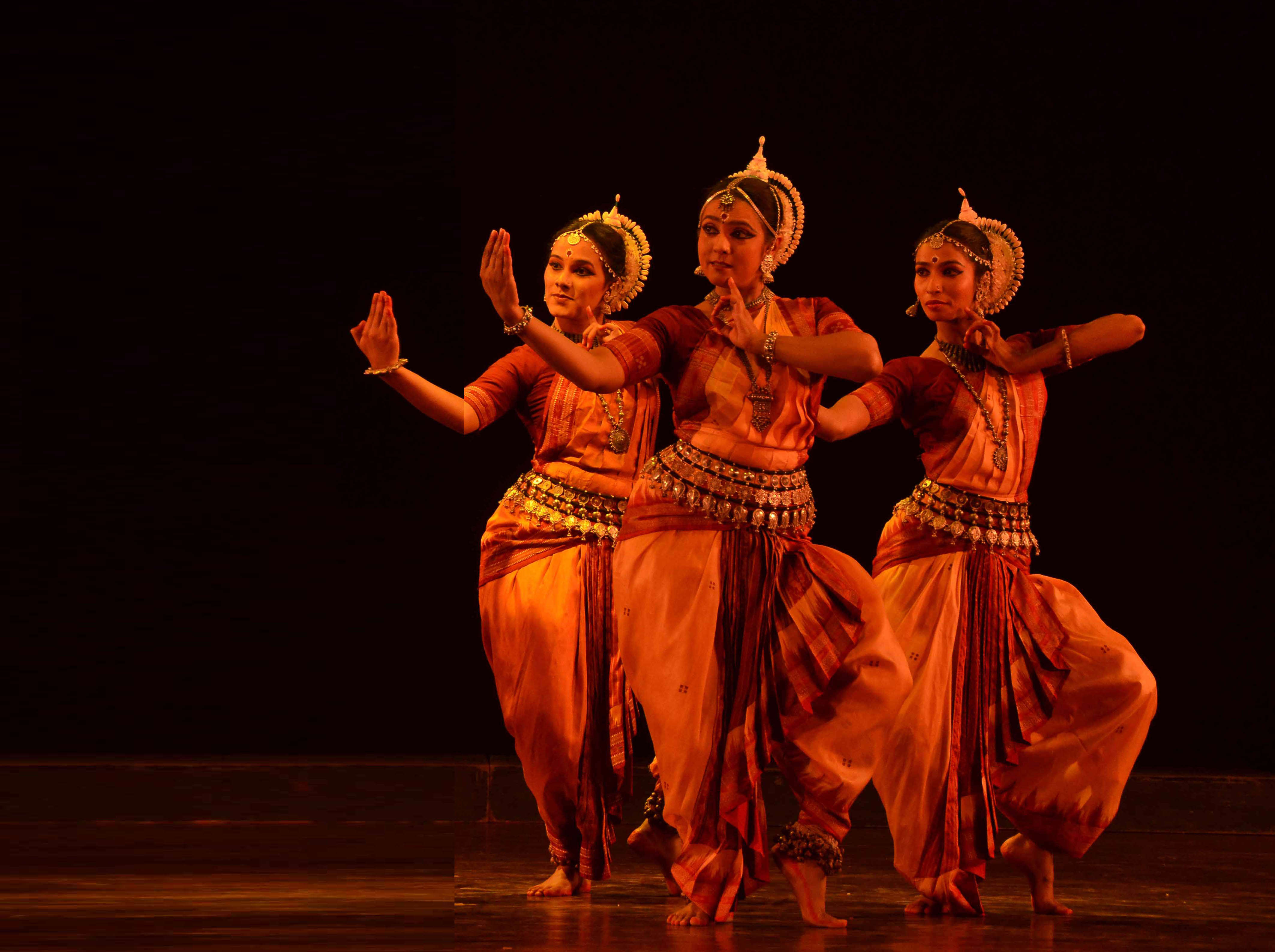
Aharya is the costumes and decorations that adorn the dancers. Pictured above is the unique costuming of Manipuri dancers, which pays close attention to the aharya and includes ornate round dresses.

Sattvika is the most abstract of the Abhinaya. Essentially, it is the mentality and emotional image communicated from the dancer to the audience. Utilizing self control and acting, dancers are able to convey complex emotions through Sattvika.
Image sources: static01.nyt.com/images/2018/08/15/arts/15ODISSIDANCE-COMBO-print/15OSSIDANCE-COMBO-facebookJumbo.jpg, sehernow.in/images-ananya2014/PritiPatel/001.jpgImage, nroer.gov.in/home/file/readDoc/57c12e0016b51c12b71ac574/Kathak 05.jpg, http://www.kalyanikalamandir.com/CmsFiles/wp-content/uploads/2016/08/angikaAbhinaya.jpg. Information source: https://www.wisdomlib.org/definition/abhinaya







 Classical Indian Dance
