
“Yato hastastato drishtihi”…”Where the hand is, the eyes follow”
“Yato drishtistato manaha”…”Where the eyes go, the mind follows”
“Yato manastato bhavaha”…”Where the mind is, there is the feeling”
“Yato bhavastato rasaha”…”Where there is feeling, there is mood.
The Natya Shastra, circa 200 BCE.
In classical Indian dance, everything begins with the hands. Through the precise motion and posing of the hands in combination with footwork, facial expression, and other gestures, dancers are able to convey complex images, stories, and emotions. These elements are all a part of the Angika, and one important aspect of the Angika are the Mudras. Each Mudra is a specific hand position, and may represent many different things. Interpretation of the Mudra are based on the context of the story within the dance. Below are a few examples of interesting Mudras:
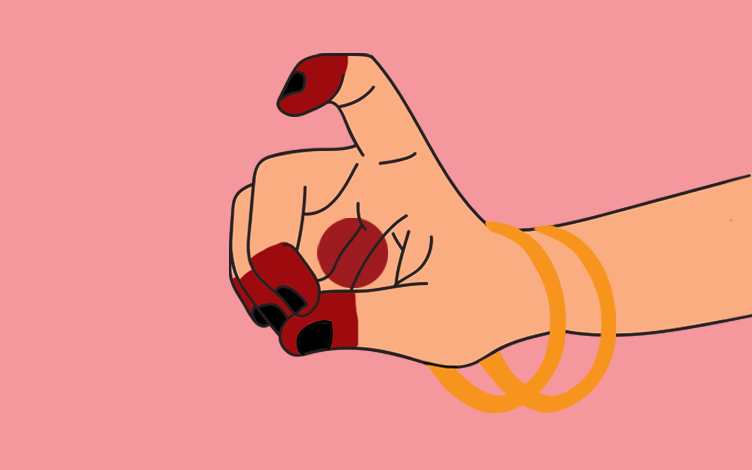
In Tamrachuda, the ring finger and middle finger are bent so as to touch the tip of the thumb. The pointer finger is bent and raised.
Representations: a rooster, a person’s head, a heron or crane, a crow, a camel, a calf, or a pen used for engraving.
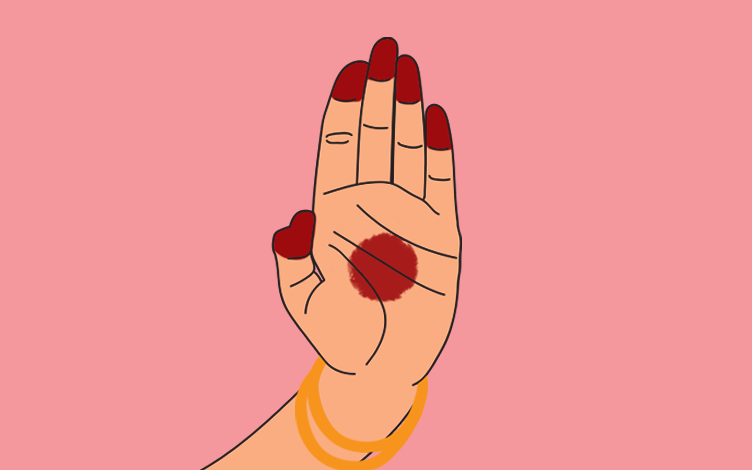
In Pataaka, the hand is placed in a relaxed, upright position. The thumb may be bent slightly.
Representations: moonlight, sea, wind, river, forest, or silence.
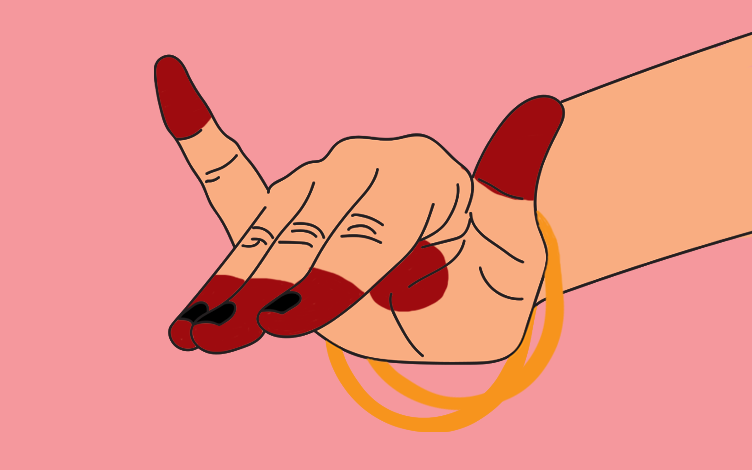
In Mrigashirsa, the thumb and pinky are raised above the rest of the fingers, which remain flat.
Representations: a deer’s head, a woman’s cheek, a costume or dress, a lute, or Lord Krishna.
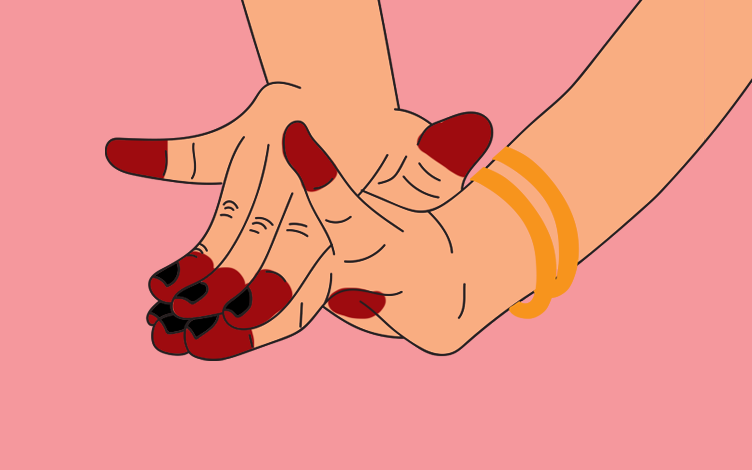
In Varaaha, one hand is put into a position similar to Mrigashirsa. The other hand is placed underneath, with pinky raised.
Representations: a wild boar, Lord Vishnu.
image and information source: http://www.esplanade.com/discover-and-learn/insight/secret-language-of-handsimages.
 Classical Indian Dance